Most Practical Cross-Border Fulfillment Tips: What Shippers Must Know
YQN Operation Team
For most E-commerce brands selling in the US, the biggest logistics savings happen after your goods arrive in the country. Top sellers don't rely on a single fulfillment model—they combine Amazon FBA, 3PL warehouses, and direct shipping to balance cost, speed, and inventory flexibility.
A smart cross-border fulfillment strategy also means optimizing inventory placement, reducing last-mile costs, managing returns efficiently, and avoiding unnecessary storage fees. The result is faster delivery, lower operating costs, and a more resilient supply chain.
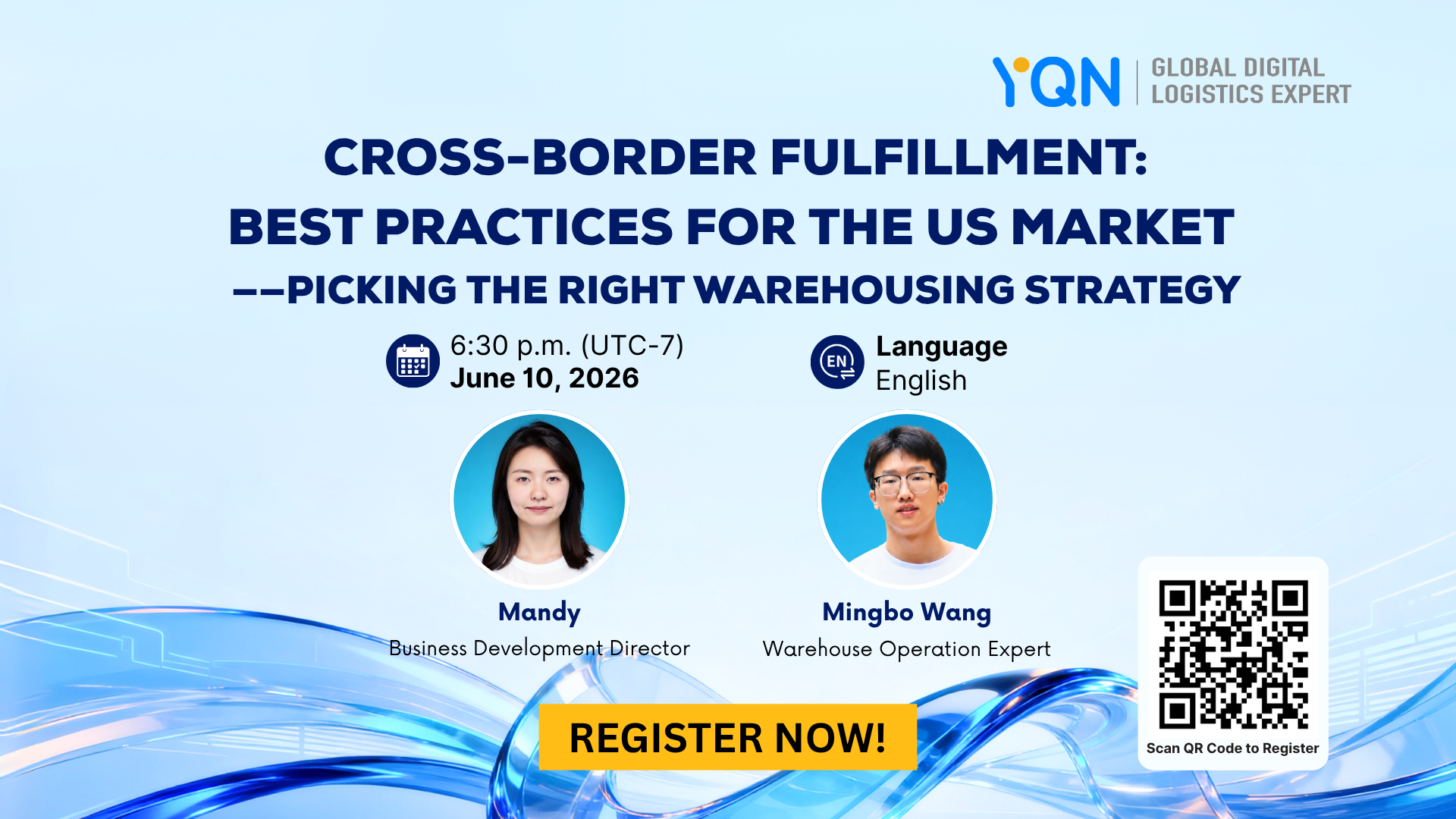
To help sellers achieve this, YQN Logistics recently hosted a webinar, "Cross-Border Fulfillment: Best Practices for the US Market 2026," sharing practical strategies used by successful brands to scale profitably.
What You Will Learn:
This webinar goes beyond basic advice, offering a strategic playbook for anyone managing cross-border e-commerce to the US.
- Direct Line vs. FBA vs. 3PL: Which fits your business?
- Smart Last-Mile Matching: How to choose the right carrier.
- Overseas Warehouse Checklist: 5 critical questions you must ask.
Differences Between 3 Cross-border Fulfillment Models
Most fast-growing e-commerce brands no longer rely on a single fulfillment model. Instead, they combine multiple logistics solutions to improve flexibility and reduce operational risk.
| Fulfillment Option | Best For | Key Advantages | Considerations |
|---|---|---|---|
| Direct Shipping | Product testing and low-volume orders | No US warehouse costs | Longer delivery times and higher transit risk |
| Amazon FBA | Fast-moving Amazon products | Prime eligibility and high customer trust | Storage limits and higher fees for oversized products |
| Independent 3PL | Multi-channel fulfillment and oversized cargo | Flexible warehousing and customized distribution | Requires reliable inventory synchronization |
Here’s a conclusion:
- Direct Shipping: Fit for early-stage testing and ultra-low volume orders
- FBA (Fulfilled by Amazon): Fit for Amazon exclusive sellers with standard fast-moving SKUs
- 3PL Warehouse: Fit for multi-channel merchants, oversized goods and FBM operations
Most mature sellers adopt a mixed strategy: Direct shipping for new product testing, FBA for Amazon hot sales, and independent 3PL warehouses for all other multi-channel inventory.
You can check spot ocean freight rates with our free ocean freight calculator: https://www.yqn.com/searchfreight.
Optimize Cross-Border Fulfillment with Smarter Returns and Delivery
Recover More Value from Returns
Efficient cross-border fulfillment doesn't end when an order is delivered. Fewer than 10% of returned products can usually be restocked because many arrive without original packaging, tags, or in resale condition. For high-value items, use clear repair and repacking SOPs or work with local refurbishment partners. For low-value products, liquidation or recycling is often the most cost-effective option.
Reduce Fulfillment Costs Without Slowing Delivery
Lowering cross-border fulfillment costs starts with inventory placement. Store products closer to your main customer base to reduce last-mile shipping expenses and shorten delivery times. You can also use regional carriers such as Uni and SpeedX, which often offer lower rates than major express providers while meeting the delivery standards of leading E-Commerce marketplaces.
You can check spot ocean freight rates with our free ocean freight calculator: https://www.yqn.com/searchfreight.
Five Questions to Ask Before Choosing a Cross-border Fulfillment Services
Locating inventory closer to customers helps reduce shipping costs and delivery times. However, warehouse location matters.
For example, storing all inventory on the US West Coast while most customers are located on the East Coast can significantly increase last-mile shipping expenses.
Before selecting a US warehouse partner, ask these five questions:
1. Does the warehouse network match your customer distribution?
Strategic warehouse locations help reduce shipping zones and delivery costs.
2. Does the provider offer real-time inventory visibility?
A modern WMS and OMS integration enables accurate inventory management across sales channels.
3. Can they maintain consistent fulfillment speed during peak seasons?
Ask about order processing SLAs and capacity during high-volume periods.
4. Can they handle your product requirements?
Oversized, heavy, or specialized cargo may require dedicated equipment and LTL transportation capabilities.
5. Is responsive customer support available?
A dedicated logistics team can quickly resolve customs issues, address changes, and delivery exceptions.
Optimize Your End-to-End Supply Chain
YQN logistics can deliver end-to-end cross-border fulfillment solutions, covering first leg ocean freight, US warehousing and last-mile delivery. Our goal is not just offering a single freight quotation or storage space, but providing sustainable supply chain support for your US market expansion.
Need immediate assistance? Contact a YQN logistics expert on WhatsApp: +44-7873-164583 to discuss freight rates, fulfillment models and build a more efficient cross-border fulfillment network.