Closure of Strait of Hormuz: What does it Mean for Your Supply Chain
Following the escalation of the conflict between the United States and Iran since February 2026, Iran’s Islamic Revolutionary Guard Corps (IRGC) has claimed that the Strait of Hormuz is closed and under their direct control.
In this article,YQN Logistics provides a clear-eyed analysis of Hormuz Strait closure to global shipping.
Understanding the importance of Strait of Hormuz
The Strait of Hormuz is a narrow bottleneck, just 21 miles wide at its slimmest point. It is the sole maritime gateway connecting the Persian Gulf to the Gulf of Oman, the Arabian Sea.
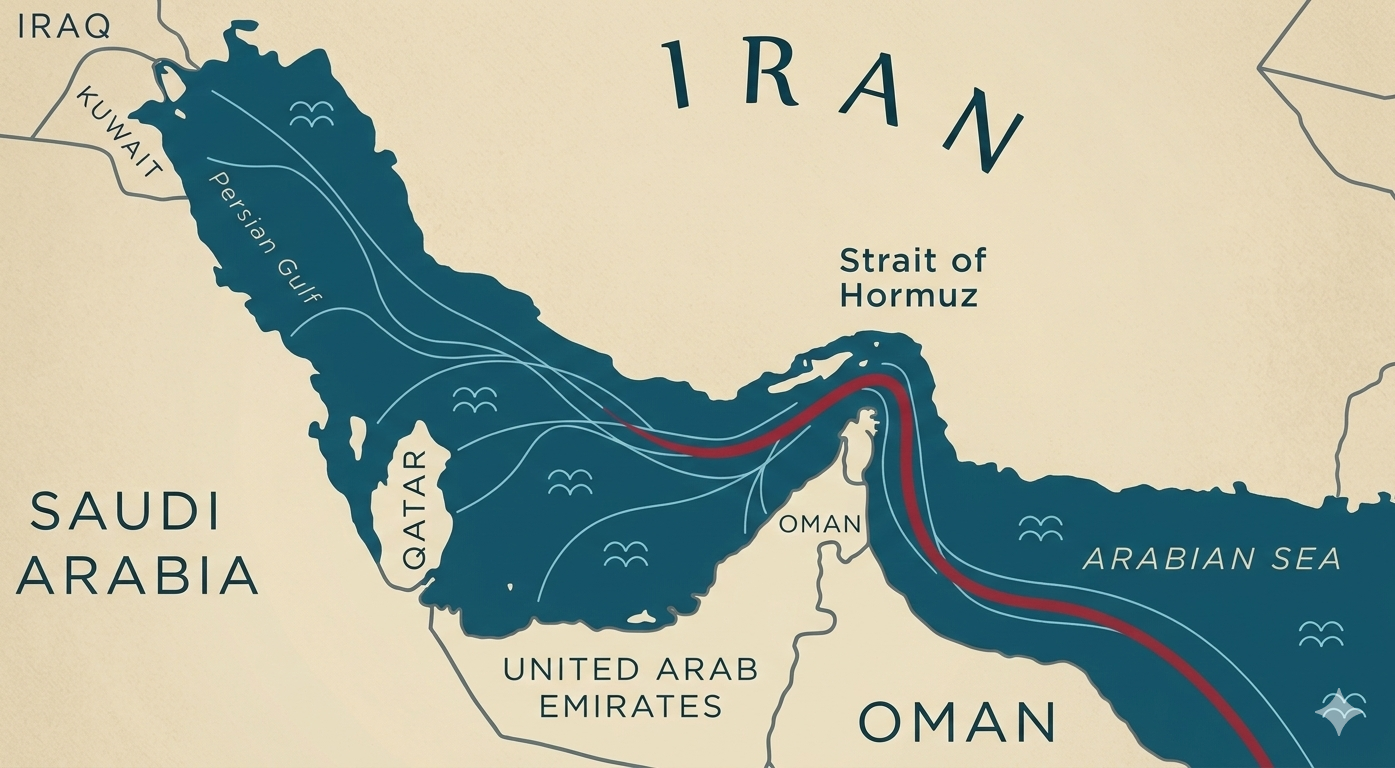
The closure of the Strait of Hormuz will cut off shipping to most ports in the Middle East.
| Coastline | Major Affected Ports/Nations | Strategic Impact |
| West of the Strait | Saudi Arabia (Dammam), Kuwait, Bahrain, Qatar, UAE (Jebel Ali, Abu Dhabi), Iraq (Umm Qasr). | These nations are entirely reliant on this single exit. With the Strait closed, their sea routes are suspended. They have very little commercial maritime bypass. |
| East of the Strait | Oman (Sohar, Salalah), India (Nhava Sheva). | These ports are currently outside the immediate blockade zone. They have suddenly become the critical lifelines for transshipment, storage, and land-bridge operations. |
Influence of the Hormuz Strait Closure
The immediate impact of closure of the Hormuz Strait is severe.
For energy markets, the closure halts the daily flow of roughly 30% of the world’s liquefied natural gas (LNG) and 20% of global oil consumption—all of which transits through the Strait of Hormuz, according to the U.S. Energy Information Administration. Therefore the closure of Hormuz Strait will cause the price of oil and gas jumps in a short period of time.
For general cargo, it means thousands of containers are stranded, disrupting supply chains for critical goods ranging from automotive components to life-saving medical supplies. Meanwhile, air freight is facing significant delays due to the temporary closure of airspace by multiple countries.
Major Ocean Carriers’ Response
The reaction from global shipping lines has been a spectrum ranging from cautious paralysis to aggressive risk management.
MSC: On March 3, MSC announced that a mandatory USD 800 per container surcharge will be applied to all affected containers en route to the Persian Gulf. All such cargo will be diverted to the next safe port of discharge, where customers must arrange pickup and recovery at their own cost and risk. MSC also confirmed it will suspend all services to Persian Gulf ports going forward.
Maersk: Effective March 4, Maersk has suspended new bookings for general cargo to/from the UAE, Oman (except Salalah), Iraq, Kuwait, Qatar, Bahrain, and Saudi Arabia (Dammam and Jubail only). Acceptance of reefer and dangerous/special cargo to these destinations is fully halted. Shipments to/from Israel remain open except for dangerous goods. Services to Jordan and Lebanon continue as normal.
WHL & PIL: Both carriers are still accepting cargo verbally on Red Sea/Persian Gulf routes despite heightened risks. However, freight rates have surged by USD 2,000–4,000 per container, transit times are significantly delayed, and shippers may face increased risk of cargo damage or loss due to volatile conditions.
To get an immediate, real-time quote and secure the last remaining spaces, please use YQN Logistic’s Online FCL Instant Quote Tool.
Shipping Rates and Forecast
According to Eason, Pricing Manager at YQN Logistics, the current rate increase alone is approximately USD 3,000 per FEU, and an additional war risk surcharge of roughly USD 3,000 per FEU is also expected.
Surcharges
| Cost Component | Estimated Surge (USD per FEU) | Nature and Rationale of Cost |
| Base Freight (GRI/FAK) | +$3,000 | Pure scarcity pricing. With capacity withdrawn, the few remaining slots are auctioned to the highest bidder. |
| War Risk Surcharge (WRS) | +$3,000 | A mandatory premium required by marine insurers to cover the risk of entering an active conflict zone. This cost is passed directly to the shipper. |
Space Available: From China To Middle East
| POL (Port of Loading) | POD (Port of Discharge) | 20ft (USD) | 40ft (USD) |
| Shanghai | Jeddah | 4,100 | 6,500 |
| Shanghai | Sokhna | 4,100 | 6,500 |
| Shanghai | Aqaba | 4,150 | 6,600 |
| Shanghai | Djibouti | 4,200 | 6,700 |
| Shanghai | Aden | 4,850 | 7,500 |
| Shanghai | Port Sudan | 4,850 | 7,500 |
| Shanghai | Berbera | 4,850 | 7,500 |
YQN Logistics is actively updating the shipping situation from China to the Gulf region.
You can chat with our expert (WhatsApp: +44 7873 164583) to secure your shipping space now!
YQN Logistics’ Strategic Advice
Given the current volatility in the Persian Gulf and the Strait of Hormuz, shippers should seriously consider Jeddah as a strategic gateway for Gulf-bound cargo. While transit times may increase slightly due to overland haulage from Jeddah to GCC destinations, the route offers greater predictability, lower security risk, and strong institutional support from Saudi authorities.
We advise clients to:
- Option A: The "Wait and See" Strategy (For Non-Urgent, Low-Value Cargo)
Action: Halt all shipments to the region immediately. Wait at least for 2 weeks and probably the strait of Hormuz will be reopen.
- Option B: Change Shipping Routes (For High-Urgency, Time-Sensitive Goods)
Action: Direct all current and new bookings to be discharged at Jeddah (UAE) and use trucking to your destinations.
- Option C: The "Lock-In" Plan (For Critical Supply Chain Components)
Action: Pay the extra shipping fee immediately to secure space on the few remaining vessels still willing to attempt the passage.
For a personalized strategy assessment or to discuss your specific risks, you can chat with our Logistics Expert on WhatsApp: +44 7873 164583. We are here to help you navigate this global crisis.